

Rajasthan is famous for its forts and palaces and rightly so. But the travellers who return from the state with the most vivid memories are rarely those who ticked off the usual landmarks. They are the ones who slowed down, wandered off the well-worn path, and found the Rajasthan that exists quietly alongside the tourist trail. Here are nine experiences that most itineraries leave out and shouldn’t.
1. Two Heritage Stays That Still Feel Like Home: Rohetgarh & Mihirgarh
Between the towns of Rohet and Mihirgarh in Pali district lies a world that operates at its own unhurried pace. Rohetgarh is a 17th-century fort where the family patriarch still wanders the courtyards and meals feel like a personal invitation. Nothing here is manufactured for guests the warmth is simply how things have always been done.
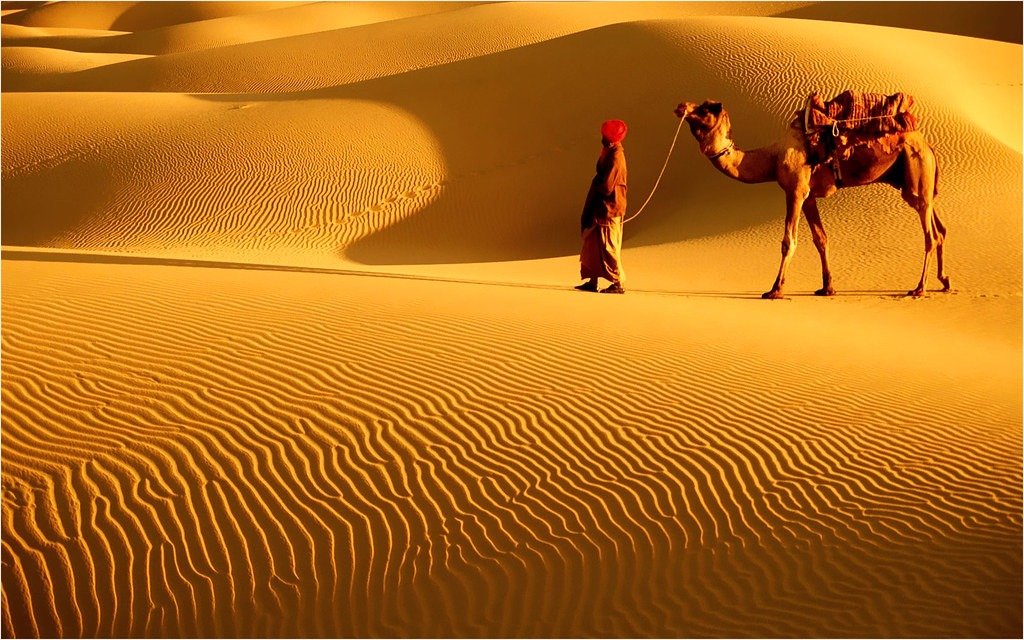
Mihirgarh, a short distance away, is its stylistic opposite: a new-age palace positioned in the middle of the desert, surrounded by nothing but the flat immensity of the Thar. Its rooms are architecture as much as accommodation. Its silence is the kind that city dwellers spend years searching for. Together, the two properties represent something rare in Indian heritage hospitality the feeling of being genuinely, unhurriedly welcomed.
2. Khad Cooking: Food Born from the Desert
Long before kitchens existed, the nomadic communities of the Thar Desert solved a remarkable culinary challenge: how do you prepare a slow-cooked meal when you are constantly moving, without fuel, without utensils, without stopping? Their answer was Khad marinated meat sealed in leaves and buried beneath sand and embers, left to cook in the earth’s own heat while life continues above ground.
The result, hours later, is extraordinary meat of unusual tenderness infused with a deep, smoky warmth that no conventional oven can replicate. At House of Rohet, guests participate in the entire process: the marination, the wrapping, the burying, and then the patient wait before dinner, when the earth finally gives back what it was entrusted with. It is one of those experiences that reframes the word “authentic” entirely.
3. Kashidakari: Meeting the Artisans Behind a Disappearing Craft
In a small house in Rohat village, a woman embroiders at a speed that seems impossible for needlework so precise. She has been practising since childhood, her fingers carrying decades of pattern memory, tracing flowers and geometric forms that trace their origins back through Persian Sufi weavers and Mughal court ateliers to the 11th century.
This is Kashidakari a tradition that arrived in Kashmir, migrated to Rajasthan through centuries of trade, and was adopted by the Jingar community, traditional saddle-makers whose craft has moved from leather goods and mojari footwear to bags, furnishings, and decorative pieces of genuine beauty. The craft is largely sustained by women, and the artisans who demonstrate it speak quietly of the uncertainty ahead who will carry it forward when the older hands slow down? Sitting with them, watching the needle move, is the kind of travel moment that no brochure can plan for.
4. Riding a Marwari Horse Across Open Desert
There is a moment, watching a Marwari horse gallop across open terrain, when you understand why medieval Rajput warriors trusted these animals with their lives. The breed’s unmistakable inward-curving ears catch the light as the horse moves with a fluid, muscular grace that blends Arabian refinement with the raw endurance of a creature bred for the desert’s extremes.
The Singh family of House of Rohet maintains one of the finest privately bred collections in the country, with every horse trained by the family itself. Equestrian programmes range from gentle morning rides for beginners to six-day riding safaris for experienced riders, with mobile tents set up along the route for longer journeys. This is not a tourist activity tacked onto a heritage stay it is a continuation of a living tradition stretching back to the Rathore clan of the 12th century.
5. Bullet Baba Temple: India’s Most Intriguing Roadside Shrine
On National Highway 65 between Jodhpur and Pali stands a temple unlike any other. Its sanctum sanctorum is a Royal Enfield Bullet 350 motorcycle garlanded with marigolds, tended by devotees, visited daily by truckers and travellers who stop to offer prayers before continuing their journeys.
The story begins in the winter of 1988, when Om Singh Rathore lost control of his motorcycle on this stretch of road and died at the spot. Police took the motorcycle to a nearby station. By morning, it had returned to the accident site. They confiscated it again, drained the fuel tank, chained it. It returned again. After repeated inexplicable returns, locals declared it a divine vessel and built a temple around it. Devotees believe that Om Banna’s spirit continues to patrol the highway, protecting those who stop to pay their respects. You do not have to believe to be moved by it. That, perhaps, is the most Indian thing about it.
6. A Village Safari That Goes Beyond the Surface
The Bishnoi community of western Rajasthan has practised environmental conservation as a matter of faith for over five centuries. Their relationship with the blackbuck — a strikingly beautiful antelope is one of wildlife’s quietly remarkable stories: the animal has been protected as sacred here for generations, long before conservation entered any government policy document.
A village safari through Bishnoi settlements offers encounters that are genuinely rare in modern tourism: opium ceremonies carried out with solemn ritual, traditional pottery being shaped on wheels unchanged for centuries, blackbucks grazing with the ease of animals that have never learned to fear humans. These are not performances staged for visitors. They are simply life, observed with permission and that distinction is everything.
7. The Shikar Dinner: A Night the Desert Orchestrates
The journey to the Shikar Dinner begins with a camel cart slow, rhythmic, the bell around the animal’s neck marking time against total desert silence. Stars appear early out here. By the time you arrive at the candlelit venue beneath a Rohida tree, the folk performers are already warming up.
Terah Taal, a percussive performance requiring extraordinary balance and precision, and Bhawai, in which artists balance stacked earthen pots on their heads while dancing, unfold against a backdrop of firelight and open sky. The menu is deliberately spare barbecued starters, simple mains, generous beverages, an honest nod to the old hunting suppers of the Shikar era. For groups and incentive travellers, this is the kind of evening that gets described for years afterwards.
8. Sleeping Under the Stars in the Thar Desert
There are few places left in India where the night sky is as dark as it was a century ago. The area around Mihirgarh is one of them. No urban sprawl, no competing glow just the Milky Way stretching from horizon to horizon with a clarity that most people have never seen in their lives.
Star beds, comfortable beds arranged on private terraces under mosquito nets, with a telescope provided turn this natural phenomenon into something intimate. You are not watching the sky from a designated viewpoint with a crowd. You are sleeping under it, the desert around you, the silence complete. It is, by some distance, the most underrated luxury experience in Rajasthan, and the one most likely to stay with you longest.
9. Attend a Local Festival Instead of Only Sightseeing
Rajasthan’s culture comes alive during its festivals. Instead of only visiting monuments, plan your trip during events like the Pushkar Camel Fair or the Desert Festival Jaisalmer.These festivals include folk dances, music, camel races, local markets, and traditional food. Experiencing these celebrations gives travelers a much richer understanding of Rajasthan’s heritage.
The Rajasthan Worth Staying For
The forts of Rajasthan are magnificent. But they are also, increasingly, experienced through a lens and remembered as a photograph. The experiences described here are different. They require a little intention, a willingness to slow down, and a travel partner who knows where to look.
At S5 Hospitality, we have spent over three decades building journeys across India for travellers who want more than a checklist. Our Rajasthan programmes are designed around exactly this kind of deep bespoke itineraries that pair the iconic with the unexpected, for travellers from the UK, US, and beyond who come to India not just to see it, but to feel it. If you are ready to find your version of Rajasthan, we would love to help you plan it.
Visit us at S5hospitality.com or reach out to our team directly. We are here to make your travel dreams a reality.